
We are hiring! Job openings are on our Careers page.

Acacia baileyana

Cootamundra Wattle

Height
5m
Width
3m
Tree shape

Estimated size at 10 years

Email me when it's back

Acacia baileyana can't be ordered right now. Leave your email and we'll send a message when Acacia baileyana is available again.

Notify me

Stock Info

Standard height
The height of the clear trunk before the graft and branching begins.
Low worked (LW)
Grafted, or allowed to branch, much lower on the trunk.
Clear trunk (CT) vs Bushy
Clear trunk has its branches trimmed up. Bushy is allowed to grow out from lower down.
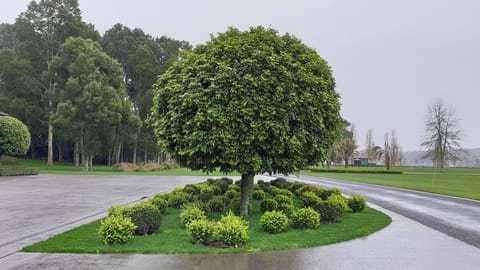
Cloud pruned
Foliage shaped into distinct, rounded “clouds” on carefully spaced branches.

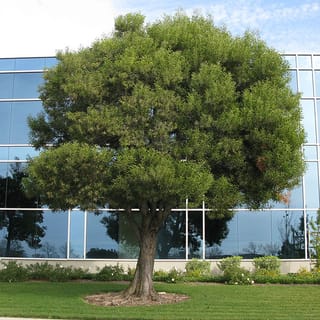
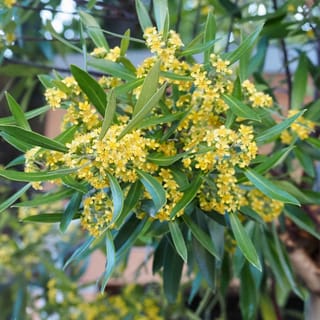
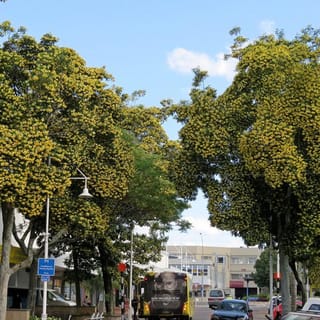
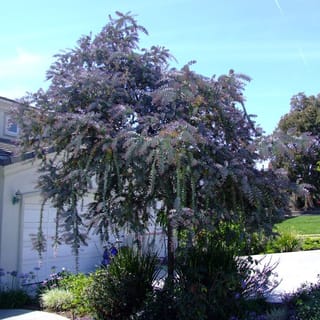
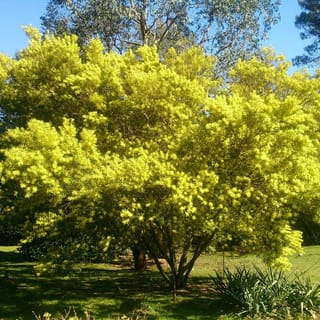
Acacia baileyana, commonly known as Cootamundra wattle, Bailey's acacia, or golden mimosa, is a fast-growing, graceful evergreen prized for its soft, feathery, blue-grey to silvery-green foliage and spectacular display of bright golden-yellow flowers. It typically develops a wide-spreading, dome-shaped making Acacia baileyana ideal as a feature tree, screen, or focal point in larger gardens, parks, and contemporary landscapes.

The finely divided, bipinnate leaves create a delicate, textured appearance year-round, often with a glaucous bloom that adds subtle colour contrast. In late winter to early spring it produces abundant, fragrant, spherical clusters of vivid yellow flowers that cover the branches in a striking golden haze, followed seed pods that provide mild seasonal interest. Extremely resilient and adaptable, Acacia baileyana can tolerate a wide variety of conditions, and does particularly well in dry areas.

It thrives in full sun for best flowering and form, with tolerance for partial shade. It responds well to occasional pruning to maintain shape, encourage density, or control size. Acacia baileyana is a practical and eye-catching choice for Mediterranean-style gardens, slopes, banks, and low-maintenance plantings.

Also known as

Bailey's Acacia·Golden Mimosa

Uses

  • Parks
  • Street Trees

Origin

  • Exotic

More about Acacia baileyana

Plant Details

Foliage Type
  • Evergreen
Hardiness (min °C)
  • -5°C to 1°C
Position
  • Full sun
  • Partial shade
Tolerance
  • Moderate coastal
  • Moderate drought
  • Moderate frost
Soil Type
  • Clay
  • Loamy
  • Sandy
Soil pH
  • Acidic
  • Neutral
Soil Moisture
  • Moist but well-drained

Seasonal Colour

FlowerJun–Nov

Foliage

This is a general guide. When a plant flowers, fruits and colours up depends on the climate where you live and on the season. If timing matters, please reach out to our team.
Foliage Type

Evergreen plants retain foliage year-round but still shed and replace some leaves gradually as part of their normal growth cycle, rather than losing them all at once.

Deciduous plants shed all their leaves for part of the year (usually in autumn and winter), usually in response to colder temperatures or dry seasons, often producing seasonal colour before leaf drop.

Semi-evergreen plants sit between the two, keeping most of their foliage but losing some or all leaves briefly under cooler or drier conditions before quickly regrowing them.

Soil pH

When designing and planting your garden, it can be useful to know whether the soil is acid or alkaline, as different plants thrive in different soils. The soil pH is a number that describes how acid or alkaline your soil is. The soil pH scale will give you an idea of what soils a species will grow in.

Acidic soils have a pH below 7.0

Alkaline soils have a pH above 7.0

Neutral soils have a pH of 7.0

Soil Type

Chalky soil is alkaline and often contains visible pieces of chalk or limestone. It drains very quickly and can be low in nutrients, making it difficult for many plants to grow unless organic matter is added. Some plants, however, thrive in its free-draining, lime-rich conditions.

Rocky soil contains a high proportion of stones and gravel. It usually drains well but holds very little water or nutrients. Plant roots may struggle to establish, though hardy, drought-tolerant plants can adapt to it.

Sandy soil has large particles that feel gritty to the touch. It drains quickly and warms up fast in spring, but it does not retain moisture or nutrients well. Regular watering and the addition of compost can improve its fertility.

Loamy soil is a balanced mix of sand, silt, and clay. It holds moisture and nutrients well while still allowing excess water to drain, making it ideal for most plants. Loam is generally considered the best all-round soil for gardening and agriculture.

Clay soil is made up of very fine particles and feels smooth or sticky when wet. It retains water and nutrients well but drains poorly and can become compacted. With proper management, such as adding organic matter, clay soil can be very fertile.