
Most people reckon spring is the best time to plant trees. Warmer weather, new growth everywhere – it makes sense on the face of it.
But if you want to give a new tree the best possible start, winter is often the smarter choice.
Across New Zealand, winter brings cooler temperatures, more consistent soil moisture, and less stress on newly planted trees. While your tree won’t look like much above ground, important root development happens below the surface. This gives it time to settle in before spring kicks off, so it’s properly established when the growing season picks up.
Whether you’re planting a single tree at home, creating a shelterbelt, or managing a larger landscape project, winter is one of the best times of year to get trees into the ground.
At Leafland, winter is our busy season – it’s when most trees are ready to move. Trees are lifted, prepared, and delivered to projects right across New Zealand. A lot of our customers place big orders now to take advantage of winter planting. Here’s why you might want to as well.
Quick Answer
Winter is one of the best times to plant most deciduous trees and many evergreen trees in New Zealand because cooler temperatures, winter rainfall, and slower top growth help reduce transplant stress. Trees planted in winter have time to establish roots before spring, giving them a stronger start for the growing season ahead.
Why Winter Planting Works So Well
1. Trees Experience Less Stress
Planting is stressful for a tree. Moving it to a new site means it needs time to adjust, settle its roots, and connect with the soil around it. In warmer months, this happens while your tree is also dealing with heat, sun, wind, and active leaf growth pushing it harder.
Winter makes it easier.
Cooler conditions reduce water loss and slow above-ground growth. Your tree isn’t under pressure to push out lots of new leaves while it’s still getting established. For deciduous trees especially, winter is ideal – they’re dormant, so without leaves to maintain, they can focus their energy on settling in.
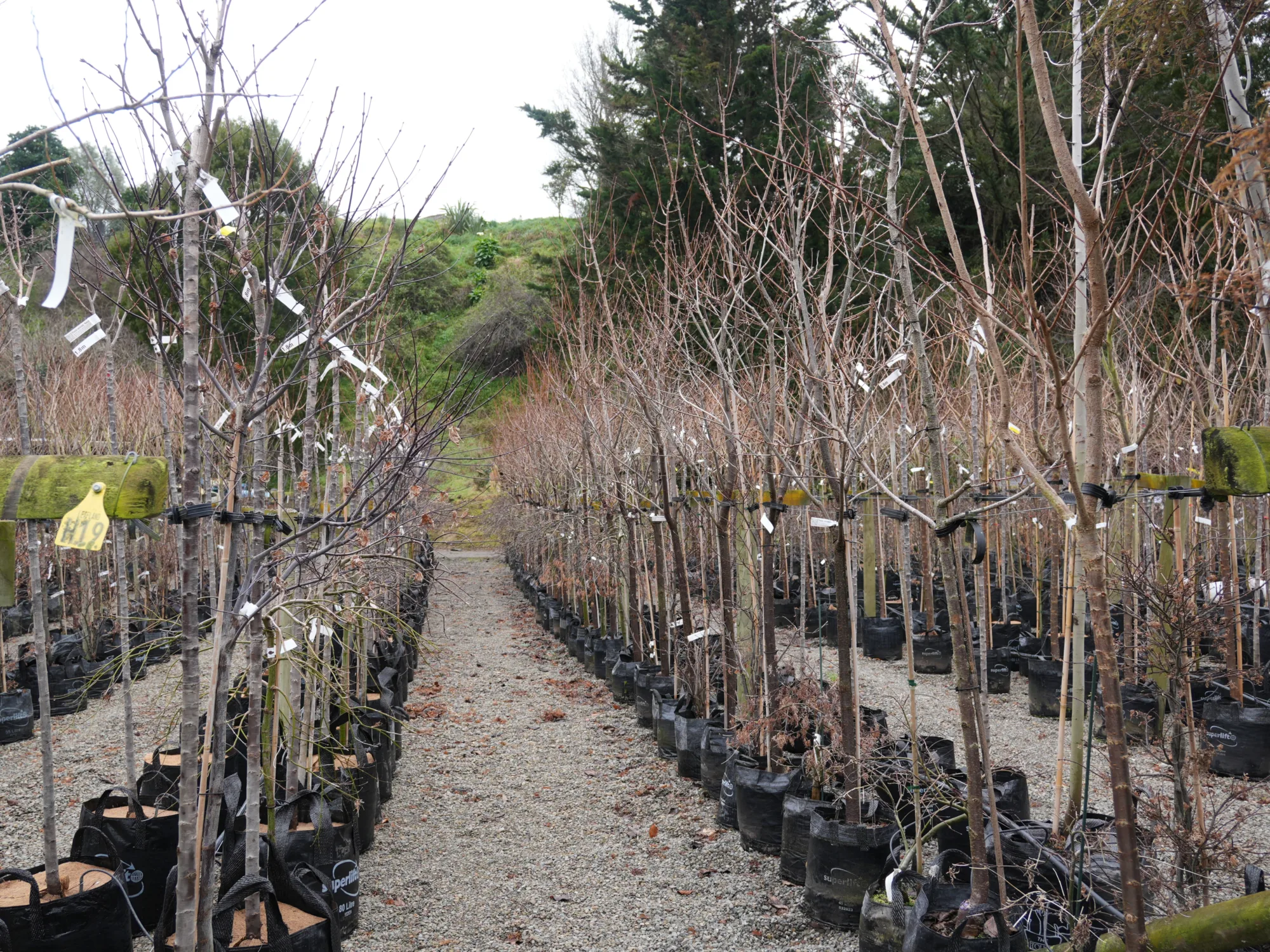
Deciduous trees that do well planted in winter:
- Japanese Maples
- Flowering Cherries
- Liquidambars
- Oaks
- Plane Trees
- Elms
- Ornamental Pears
- Deciduous Magnolias
Bare branches aren’t a sign your tree is struggling. They’re often a sign it’s at the right stage for planting.
2. Roots Can Establish Before Spring
One of the biggest advantages of winter planting is timing.
When you plant in winter, your tree has time to begin establishing its root system before spring growth kicks in. Even if it looks quiet above ground, the roots can keep developing whenever soil conditions allow.
This gives your tree a real head start.
By the time temperatures rise, it’s better prepared to support new leaves, shoots, and seasonal growth. Instead of trying to establish roots and grow heavily at the same time, it already has foundations in place.
That early establishment means:
- Stronger spring growth
- Faster recovery from transplant
- Better summer resilience
- Improved long-term performance
- Less watering pressure once warm weather arrives
A tree’s first few months in the ground matter. Winter gives it a calmer window to settle before the demands of spring and summer.
3. Winter Rain Helps New Trees Settle In
Watering is one of the most important parts of establishing a newly planted tree.
In summer, soil dries quickly. Hot days, drying winds, and high evaporation mean new trees need close attention and regular watering.
Winter is usually more forgiving.
Across much of New Zealand, cooler weather and regular rainfall help maintain better soil moisture. This gives newly planted trees a more consistent environment while they establish.
That said, winter-planted trees still need attention. Water thoroughly at planting time, and check soil moisture during dry periods. But compared with summer planting, winter generally takes the pressure off both your tree and you.
For homeowners, that means easier aftercare. For landscapers and contractors, it can mean better establishment across larger jobs.
4. Trees Are Better Prepared for Summer
Spring planting can work, but it gives trees less time to establish before summer arrives.
A tree planted in winter has several months to settle into the soil before it faces hotter, drier conditions. By summer, it’s more likely to have developed a stronger connection with the surrounding soil.
That makes a real difference.
A well-established tree can access moisture better, stay stable, and keep growing through dry periods. A poorly established tree may struggle, especially if watering is hit-and-miss.
This is why winter planting is so valuable. It’s not just about getting trees in the ground earlier – it’s about giving them the best possible preparation before conditions get tougher.
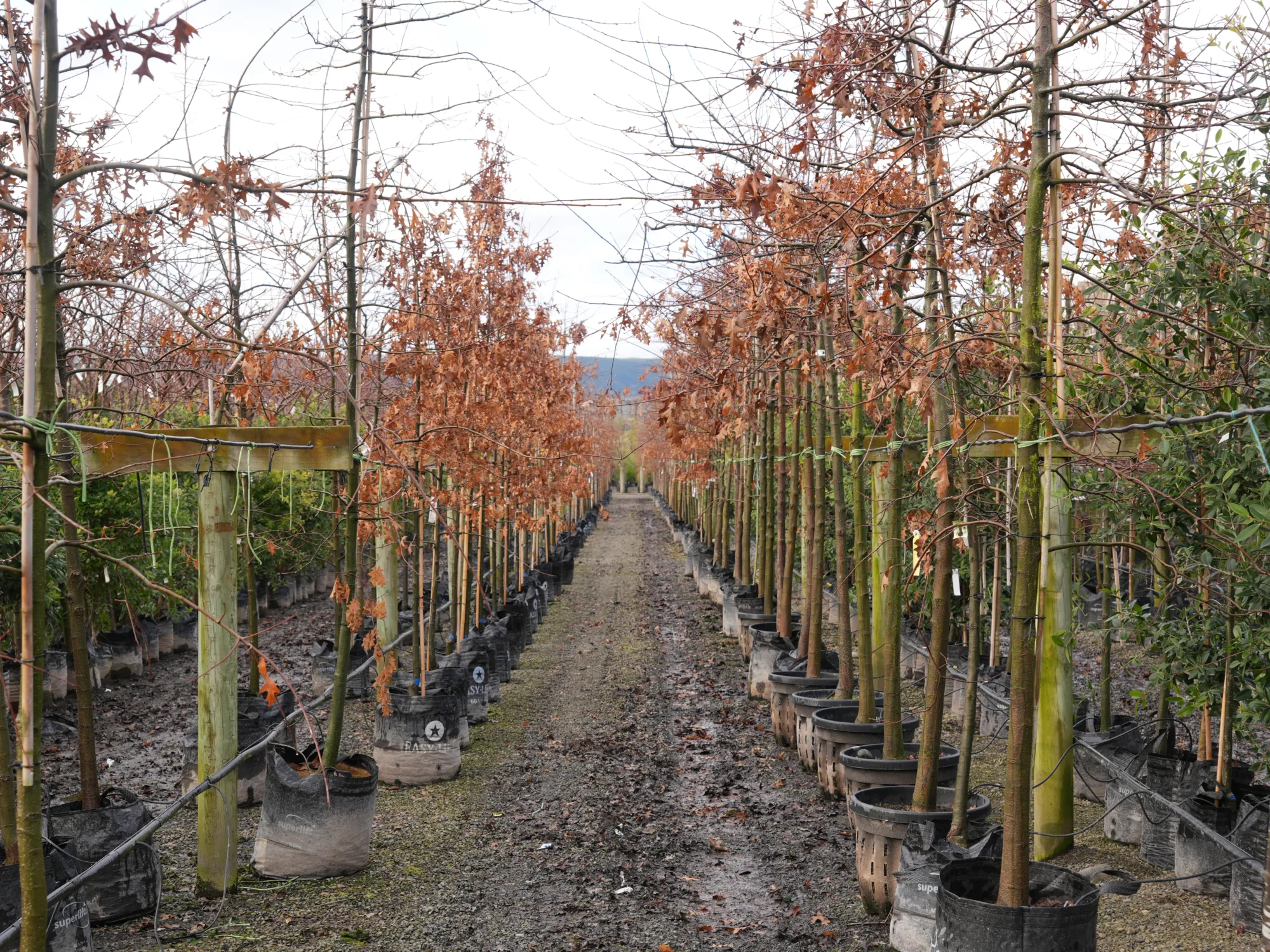
5. Winter Is Ideal for Larger Trees
Winter is also the best time to plant larger-grade trees.
For deciduous trees in particular, winter is the traditional season for lifting, moving, and planting because the trees are dormant. This reduces transplant shock and makes handling easier.
Larger trees are often used for:
- Driveways and avenues
- Parks and schools
- Streetscapes
- Lifestyle blocks and Farms
- Commercial landscapes
- Feature planting and screening
If you want instant impact, winter is a smart time to source and plant larger specimens.
It’s also when trade customers plan ahead. Landscapers, councils, developers, and contractors use winter to get trees established before spring demand picks up and before summer dryness becomes a real challenge.
Our bagging process in winter
What About Evergreen Trees?
Winter planting isn’t just for deciduous trees.
Many evergreens can also be planted successfully during winter, as long as the site suits them and the soil drains well. Evergreens don’t go fully dormant like deciduous trees, but their growth usually slows in cooler weather. This makes winter a useful establishment period for many evergreen species too.
Examples include:
- Pittosporum
- Griselinia
- Titoki
- Kōwhai
- Kānuka
- Totara
- Camellia
- Magnolia grandiflora
- Many conifers and screening trees
The key is drainage.
Trees need moisture, but they also need oxygen around their roots. If the soil is waterlogged, compacted, or holding too much water, it’s better to improve the site before planting.
Moist soil helps. Saturated soil doesn’t.
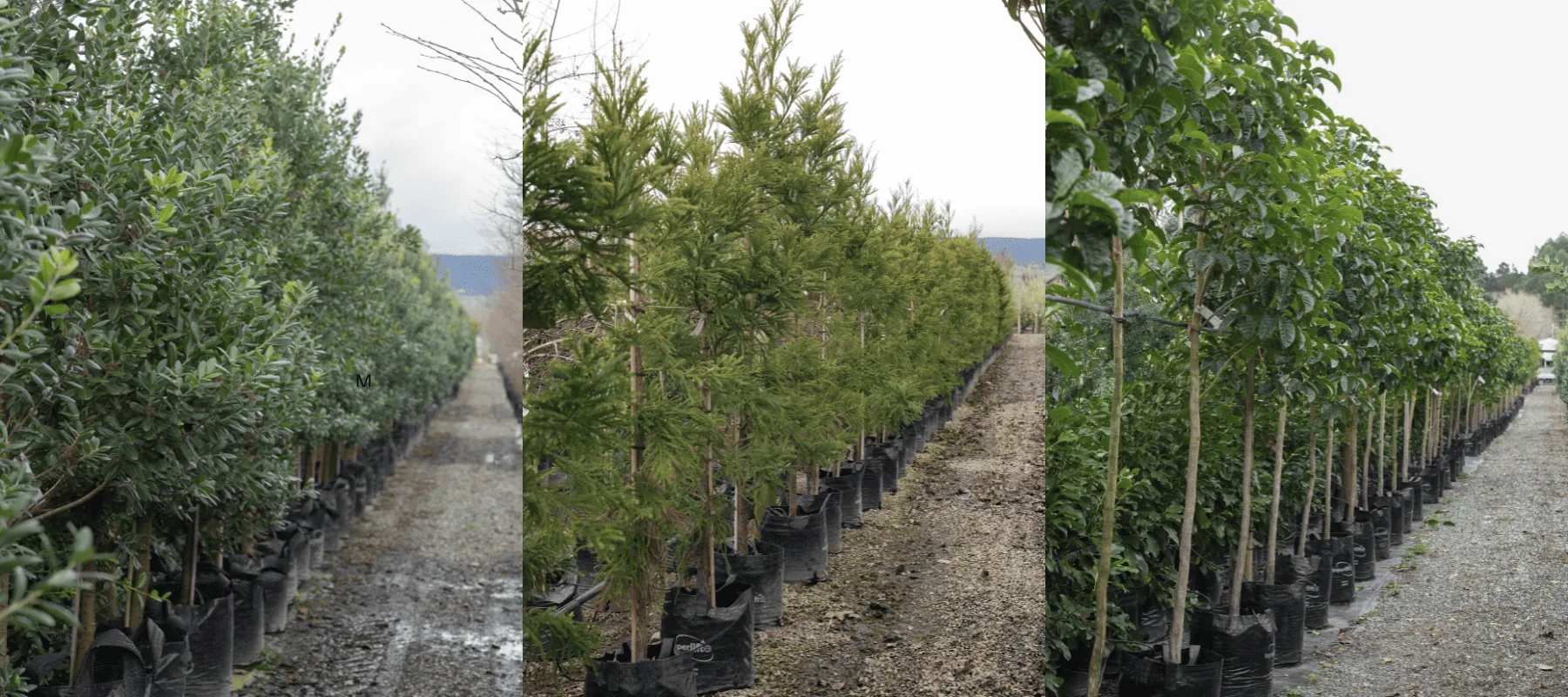
Example of evergreen trees in our nursery
Frequently Asked Questions
Can you actually plant trees in winter in New Zealand?
Yeah, you can. In fact, winter is one of the best times to plant most trees here – especially deciduous species and a lot of evergreens. Cooler temps and steady soil moisture mean your tree’s under less stress while it’s getting its roots in.
Is winter better than spring for planting?
For most trees, yes. Spring can work, but winter gives your tree more time to establish roots before warm weather and summer dryness arrive.
Do winter-planted trees still need watering?
Yes. Water thoroughly after planting. Winter rainfall may mean you water less often, but check soil moisture during dry spells.
Can evergreen trees be planted in winter?
Yes, provided the soil drains well and the species suits the site.
How do I plant a tree?
We already have a great Tree Planting Guide for you to view.
https://leafland.co.nz/plant-advice/tree-planting-guide/
Can I plant trees in wet winter soil?
Moist soil is ideal, but waterlogged ground is a no-go. If your hole fills up with water or turns into a bucket of mud, hold off. Soggy roots get starved of oxygen and struggle to establish. Wait until the soil is damp but workable before digging in.
Should I prune a tree after planting in winter?
Keep the secateurs put away for now. Most new trees don’t need heavy pruning—just snip off any dead, broken, or damaged branches so the tree can put all its energy into growing strong roots.
Can frost damage newly planted trees?
Most hardy trees handle typical winter frosts without a problem once they’re in the ground. A good layer of mulch around the base will keep the roots insulated, and planting early in the season gives them time to settle before severe cold snaps hit.
Can I reserve trees now for winter planting?
Yep, absolutely! You can lock them in with a 50% deposit. Reserving early is the best way to secure popular species and larger specimen trees before stock runs low. Reach out to our team to chat through your project, check availability, and pick the best timing.
Ready to Plant This Winter?
Winter might look quiet in the garden, but below the surface it’s one of the most important times of year for tree establishment.
By planting in winter, you give your trees time to settle, develop roots, and prepare for strong spring growth.
Whether you’re planting one feature tree at home or organising a larger landscape project, winter is the time to get started.
At Leafland, we grow and supply quality trees for gardens, landscapes, streetscapes, commercial projects, and large-scale planting right across New Zealand. Our team can help you choose the right trees for your site, check availability, organise delivery, and give you practical advice to help your trees establish well.