
We are hiring! Job openings are on our Careers page.

Ilex x altaclerensis 'Hendersonii'

Smooth-leaved Holly

Height
3m
Width
2m
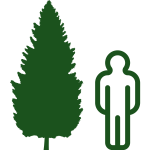
Tree shape

Estimated size at 10 years

Email me when it's back

Ilex x altaclerensis 'Hendersonii' can't be ordered right now. Leave your email and we'll send a message when Ilex x altaclerensis 'Hendersonii' is available again.

Notify me

Stock Info

Standard height
The height of the clear trunk before the graft and branching begins.
Low worked (LW)
Grafted, or allowed to branch, much lower on the trunk.
Clear trunk (CT) vs Bushy
Clear trunk has its branches trimmed up. Bushy is allowed to grow out from lower down.
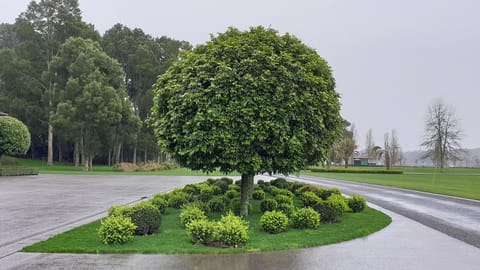
Cloud pruned
Foliage shaped into distinct, rounded “clouds” on carefully spaced branches.

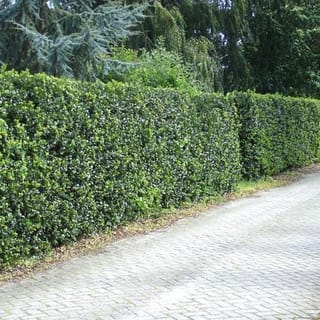
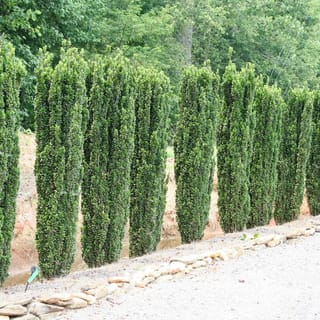
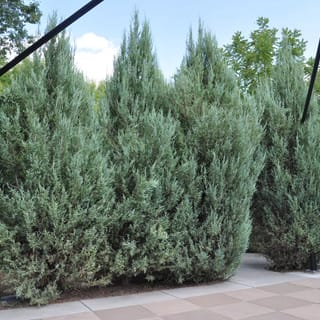
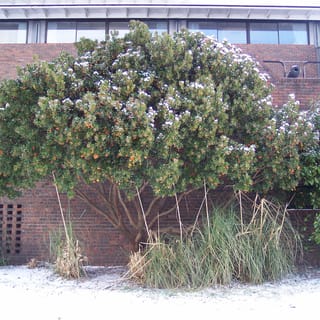
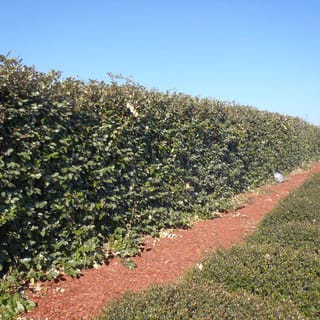
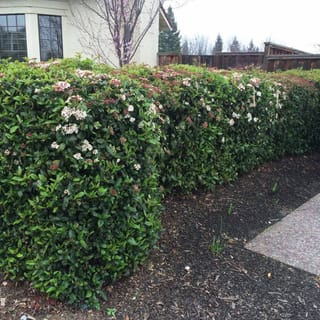
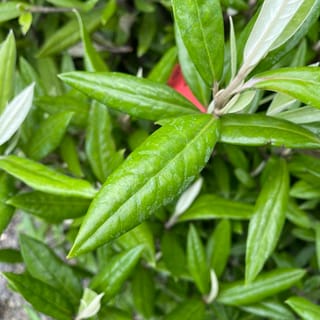
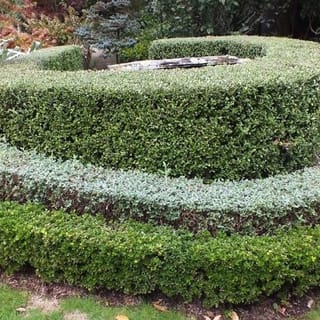
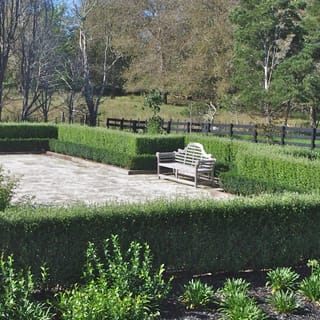
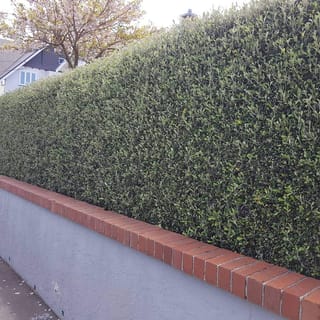
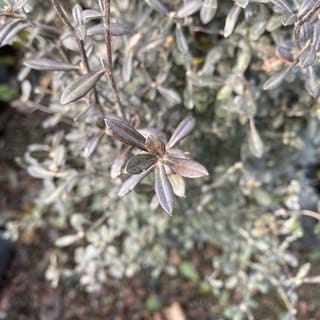
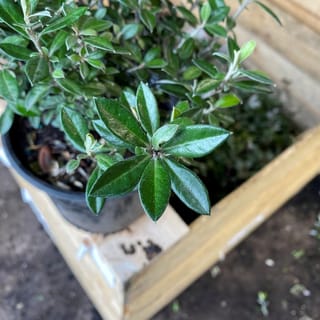
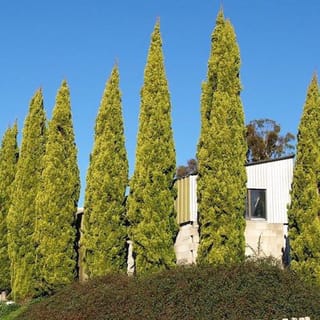
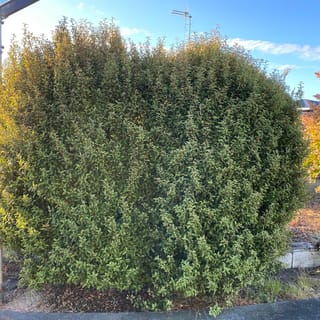
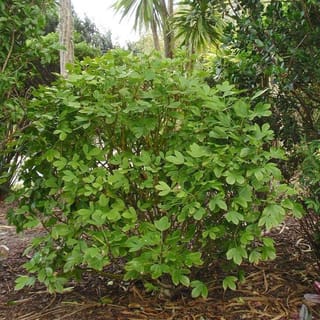
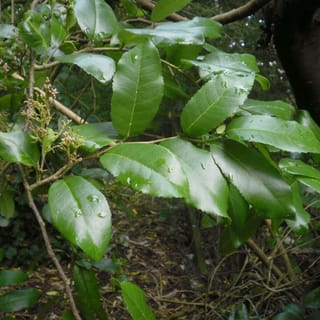
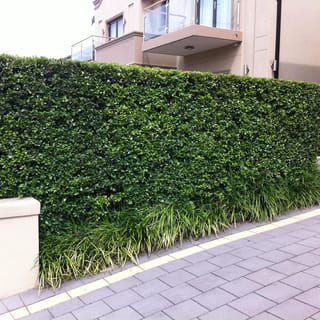
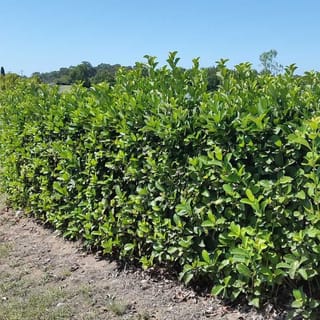
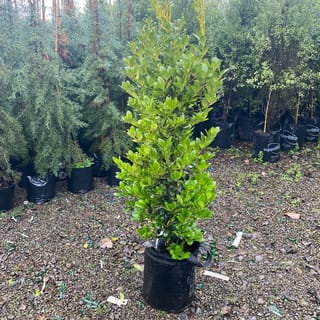
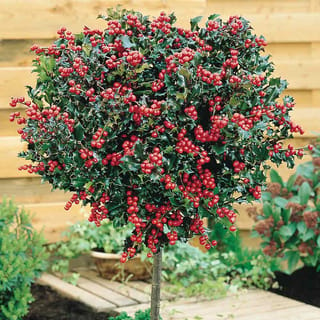
Ilex x altaclerensis 'Hendersonii' has an upright, pyramidal form and features spineless leaves. During the winter, it produces clusters of red berries, which add to its aesthetic appeal. It is an excellent option for screening and hedges, and can be trimmed into any shape. Ilex x altaclerensis is evergreen, not native to New Zealand, and a hybrid between Ilex aquifolium and Ilex perado. Ilex x altaclerensis 'Hendersonii' was developed by Thomas Hodgins in Dunganstown, Ireland in the early 19th century.

Uses

  • Attracts Birds
  • Hedging and Screening
  • Parks

Origin

  • Exotic

Plant Details

Foliage Type
  • Evergreen
Hardiness (min °C)
  • -20°C to -15°C
Position
  • Full sun
  • Partial shade
Shade Tolerance
  • Moderately tolerant
Tolerance
  • Moderate coastal
  • Moderate wind
Drought Tolerance
  • Moderately tolerant
Waterlogging Tolerance
  • Sensitive
Soil Type
  • Clay
  • Loamy
  • Sandy
  • Chalky
Soil pH
  • Acidic
  • Alkaline
  • Neutral
Soil Moisture
  • Well-drained
  • Moist but well-drained

Seasonal Colour

Foliage

FruitMar–Aug

This is a general guide. When a plant flowers, fruits and colours up depends on the climate where you live and on the season. If timing matters, please reach out to our team.
Drought Tolerance

The four-level scale, tolerant, moderately tolerant, moderately sensitive and sensitive, makes use of a number of sources of information (see the guide below for further information on this).

Regardless of a species’ drought tolerance ranking, the full expression of drought tolerance will only come about in well-established trees. Therefore, the selection of drought tolerant trees should never be seen as a substitute for good post-planting aftercare, such as mulching and irrigation.

Information sourced from the Tree Species Selection for Green Infrastructure guide produced by the Trees & Design Action Group. Find the guide here: https://www.tdag.org.uk/tree-species-selection-for-green-infrastructure.html

Foliage Type

Evergreen plants retain foliage year-round but still shed and replace some leaves gradually as part of their normal growth cycle, rather than losing them all at once.

Deciduous plants shed all their leaves for part of the year (usually in autumn and winter), usually in response to colder temperatures or dry seasons, often producing seasonal colour before leaf drop.

Semi-evergreen plants sit between the two, keeping most of their foliage but losing some or all leaves briefly under cooler or drier conditions before quickly regrowing them.

Shade Tolerance

A species is allocated its shade tolerance rating based on whether they can grow satisfactorily at a certain light availability. The four-level scale used relates approximately to the following light conditions, expressed as a percentage of full sunlight.

Tolerant (<10% full sunlight)

Moderately tolerant (10-25% full sunlight)

Partially tolerant (25-50% full sunlight)

Intolerant (>50% full sunlight)

It should be noted that many species towards the more tolerant end of the spectrum often perform better in slightly higher light levels than their tolerance rating suggests, however, it is generally unrewarding to plant moderately tolerant or tolerant trees in fully open (high-light) environments. It should also be acknowledged that, for many larger species, shade tolerance diminishes somewhat with age. This is because a tree’s need for shade tolerance is typically reduced as it becomes established within the forest canopy. Therefore, the allocated ratings are most closely related to young trees of the species and not fully mature specimens.

Information sourced from the Tree Species Selection for Green Infrastructure guide produced by the Trees & Design Action Group. Find the guide here: https://www.tdag.org.uk/tree-species-selection-for-green-infrastructure.html

Soil pH

When designing and planting your garden, it can be useful to know whether the soil is acid or alkaline, as different plants thrive in different soils. The soil pH is a number that describes how acid or alkaline your soil is. The soil pH scale will give you an idea of what soils a species will grow in.

Acidic soils have a pH below 7.0

Alkaline soils have a pH above 7.0

Neutral soils have a pH of 7.0

Soil Type

Chalky soil is alkaline and often contains visible pieces of chalk or limestone. It drains very quickly and can be low in nutrients, making it difficult for many plants to grow unless organic matter is added. Some plants, however, thrive in its free-draining, lime-rich conditions.

Rocky soil contains a high proportion of stones and gravel. It usually drains well but holds very little water or nutrients. Plant roots may struggle to establish, though hardy, drought-tolerant plants can adapt to it.

Sandy soil has large particles that feel gritty to the touch. It drains quickly and warms up fast in spring, but it does not retain moisture or nutrients well. Regular watering and the addition of compost can improve its fertility.

Loamy soil is a balanced mix of sand, silt, and clay. It holds moisture and nutrients well while still allowing excess water to drain, making it ideal for most plants. Loam is generally considered the best all-round soil for gardening and agriculture.

Clay soil is made up of very fine particles and feels smooth or sticky when wet. It retains water and nutrients well but drains poorly and can become compacted. With proper management, such as adding organic matter, clay soil can be very fertile.

Waterlogging Tolerance

Most temperate deciduous trees can cope with several weeks of waterlogging during the period of winter dormancy as metabolic activity is minimal. However, waterlogging during active growth is more serious because roots are more active and require aerobic soils. In general, the more active the growth, the more rapidly the effects of waterlogging can be seen. Factors such as the water oxygenation status and temperature will also affect how acutely waterlogging stress develops so there can be a great deal of variation around how trees experience waterlogging stress.

Tolerant species can survive consistent waterlogging for the duration of the growing season.

Moderately tolerant species can survive consistent waterlogging for approximately one month during the growing season.

Moderately sensitive species are only likely to survive if the waterlogging event is less than two weeks during the growing season.

Sensitive species are only likely to survive if the waterlogging event is less than a few days during the growing season.

It is important to note that as this scale relates to the likely time-course to tree mortality, symptoms of waterlogging (and associated dysfunction) will be apparent within a shorter period of time.

Information sourced from the Tree Species Selection for Green Infrastructure guide produced by the Trees & Design Action Group. Find the guide here: https://www.tdag.org.uk/tree-species-selection-for-green-infrastructure.html